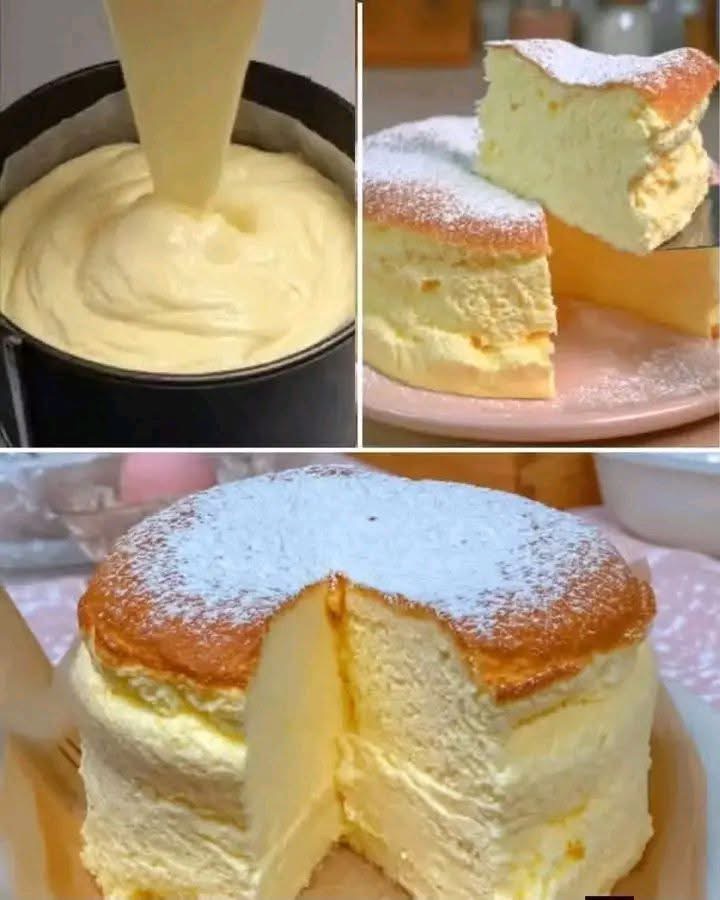
This Cloud Cake is the kind of dessert that looks almost too delicate to be real. It combines the creamy richness of cheesecake with the soft, airy texture of a soufflé. The secret is the egg whites: when whipped and incorporated carefully, they create the characteristic cloud-like structure. Japanese cotton cheesecake is also known as soufflé cheesecake and is traditionally baked gently, often in a water bath, to help maintain its delicate texture.
A little note: although the viral version says “put everything in the blender,” for the fluffiest result, it is better to blend the cream-cheese mixture but whip the egg whites separately. This preserves the air that makes the cake so light.
☁️ Ingredients
Makes: 6–8 servings
Preparation: about 20 minutes
Baking: about 50–65 minutes
Cooling: 1–2 hours
- 200 g (7 oz) cream cheese, softened
- 50 g (3½ tbsp) unsalted butter, softened
- 100 ml (about ⅓–½ cup) whole milk
- 4 large eggs, separated
- 70 g (⅓ cup) granulated sugar
- 40 g (about ⅓ cup) cake flour
- 10 g (1 tbsp) cornstarch
- 1 tsp vanilla extract
- Pinch of salt, optional
- Powdered sugar for dusting, optional
🧁 Equipment
- 7-inch/18-cm round cake pan
- Parchment paper
- Large mixing bowl
- Blender or food processor
- Electric mixer or whisk
- Rubber spatula
- Larger baking pan for the water bath
👩🍳 Instructions
1. Prepare the oven and pan
Preheat your oven to 150°C / 300°F.
Line the bottom of the cake pan with parchment paper. If your pan has a removable bottom, wrap the outside with aluminum foil to prevent water from entering during the water bath.
Place the prepared pan inside a larger roasting or baking pan.
2. Make the creamy base
Add the softened cream cheese, butter and milk to a blender.
Blend until completely smooth and creamy, with no visible lumps.
Add the egg yolks and vanilla and blend briefly until incorporated.
Add the cake flour and cornstarch and blend only until smooth.
Do not over-blend once the flour is added.
3. Whip the egg whites
Place the egg whites in a completely clean, dry bowl.
Begin beating at medium speed.
When they become foamy, gradually add the sugar.
Continue beating until you have glossy soft-to-medium peaks.
The whites should hold their shape but should not look dry or crumbly.
This whipped meringue is the major source of the cake’s airy texture. Japanese cotton cheesecake recipes similarly rely on separating the eggs and incorporating whipped whites into the cream-cheese batter.
4. Combine everything gently
Add about ⅓ of the whipped egg whites to the cream-cheese mixture.
Fold gently with a spatula.
Add another third and fold again.
Finally, add the remaining egg whites and fold just until the batter becomes evenly combined.
Don’t stir aggressively. You want to keep as much air in the mixture as possible.
5. Prepare the water bath
Pour the batter into the prepared cake pan.
Place the cake pan inside the larger baking pan.
Carefully pour hot water into the larger pan until it reaches roughly halfway up the sides of the cake pan.
The water bath helps provide gentle, even heat and is commonly used for cotton cheesecake.
6. Bake
Bake at 150°C / 300°F for approximately 50–65 minutes, depending on your oven and pan.
The cake should rise beautifully and develop a light golden surface.
When gently shaken, the center should have a soft, delicate wobble rather than looking liquid.
7. Cool slowly
Turn off the oven when the cake is finished.
Leave the cake inside for approximately 20–30 minutes, preferably with the oven door slightly open.
Slow cooling helps reduce the chance of dramatic shrinking or cracking.
Remove the cake and let it cool completely.
8. Chill and serve
Once completely cool, carefully remove it from the pan.
For an especially creamy texture, refrigerate for several hours.
Dust lightly with powdered sugar before serving.
Slice with a warm, clean knife for beautiful, soft slices.
🌟 The Best Method for a Truly “Cloud-Like” Cake
There are several important techniques behind the magic:
Soft cream cheese: Room-temperature cream cheese blends much more smoothly.
Separated eggs: The yolks provide richness while the whipped whites provide structure and volume.
Gentle folding: Rough mixing destroys the tiny air bubbles that make the cake fluffy.
Low, gentle baking: Cotton cheesecake benefits from controlled heat rather than the aggressive heat used for many ordinary cakes.
Water bath: It creates a gentler baking environment and helps the cake cook evenly.
💡 Why Does It Become So Fluffy?
Think of the egg-white foam as thousands of tiny balloons.
When you whip egg whites, air becomes trapped inside a protein network. During baking, those air bubbles expand, helping the cake rise.
The flour and cornstarch provide enough structure to hold that expansion, while the cream cheese, butter and milk give the cake its creamy, tender character.
That’s why the finished cake can be simultaneously creamy, soft, airy and slightly jiggly.
🏯 A Little History
Cloud Cake is closely related to Japanese cotton cheesecake, also called soufflé cheesecake. Unlike dense Western-style cheesecake, this Japanese style is deliberately light and airy.
Its development is associated with Japanese pastry chefs adapting Western cheesecake traditions. One widely reported account credits Tomotaro Kuzuno with being inspired by German cheesecake after traveling to Berlin in the 1960s. Other historical accounts credit Japanese pastry chef Yasui Juichi with an early soufflé-style version, so the exact origin is debated.
Over time, the style became famous for its delicate texture, gentle sweetness and characteristic wobble.
❤️ Benefits of This Dessert
While Cloud Cake is still a dessert and should be enjoyed as part of a balanced diet, it does have some appealing qualities:
- Eggs provide protein and contribute structure to the cake.
- Cream cheese provides calcium and protein along with its creamy flavor.
- Milk contributes protein and calcium.
- The recipe uses considerably less sugar than many very sweet cakes.
- The airy texture means a slice can feel light and delicate even though it remains an indulgent dessert.
These are nutritional qualities of the ingredients—not medical benefits or a reason to eat unlimited portions.
🍓 Delicious Ways to Serve It
Cloud Cake is wonderful by itself, but you can make it even more special.
🍓 Strawberry Cloud Cake
Serve with fresh strawberries and a few spoonfuls of whipped cream.
🫐 Berry Cloud Cake
Add blueberries, raspberries and blackberries around each slice.
🍋 Lemon Cloud Cake
Add a little lemon zest to the batter for a fresh citrus aroma.
🍵 Matcha Cloud Cake
Replace a small portion of the flour with sifted matcha powder.
🍫 Chocolate Cloud Cake
Add a modest amount of unsweetened cocoa powder and serve with berries.
🍯 Honey Cloud Cake
Drizzle a little honey over the chilled cake immediately before serving.
⚠️ Common Mistakes to Avoid
1. Overbeating the egg whites
Very dry, stiff meringue can be difficult to fold and may contribute to an uneven cake.
2. Deflating the meringue
Aggressive mixing removes the air responsible for the cloud-like texture.
3. Opening the oven repeatedly
Sudden temperature changes can cause the delicate cake to collapse.
4. Baking at excessive heat
A dark top before the center has cooked can indicate that the oven is too hot.
5. Cooling too quickly
Gradual cooling gives the cake a better chance of maintaining its structure.
6. Using cold cream cheese
Cold cream cheese can leave lumps in the batter.
☁️ Formation of the Perfect Cloud
When everything goes right, you’ll see a beautiful transformation:
Cream cheese + butter + milk
⬇️
Smooth creamy base
⬇️
Egg yolks + flour + cornstarch
⬇️
Silky batter
⬇️
Whipped egg whites + sugar
⬇️
Air-filled meringue
⬇️
Gentle folding
⬇️
Light, aerated batter
⬇️
Water-bath baking
⬇️
🌟 Soft, golden, jiggly Cloud Cake 🌟
👩🍳 My Favorite Method
If you’re making this twice a week, here’s the method I’d recommend:
Blend the cream cheese, butter, milk, yolks and vanilla.
Sift in the flour and cornstarch.
Whip the whites separately with the sugar.
Fold them together gently.
Bake slowly in a water bath.
Cool gradually.
Chill before slicing.
That gives you the best chance of getting the beautiful cotton-soft, cloud-like texture rather than simply making a dense cream-cheese cake.
☁️ Conclusion
This Cloud Cake is a beautiful example of how a few everyday ingredients can create something extraordinary. The combination of cream cheese, butter, milk, eggs and a small amount of flour produces a dessert that is rich enough to satisfy cheesecake lovers while remaining wonderfully light.
The real magic isn’t the blender—it’s the air trapped in the whipped egg whites, gentle folding and careful baking.
So whether you’re making it for Sunday dessert, afternoon tea, a family gathering, or simply because you love a soft homemade cake, this is one recipe worth keeping.
One bite, and you’ll understand why it’s called Cloud Cake. ☁️🤍
💬 For the recipe lovers
If you love soft, creamy, melt-in-your-mouth desserts, save this recipe and share it with someone who would happily eat an entire Cloud Cake!
Must express something to keep getting my recipes… Thank you! ❤️
Recipe in the first C.O.M.M.E.N.T 👇😋